
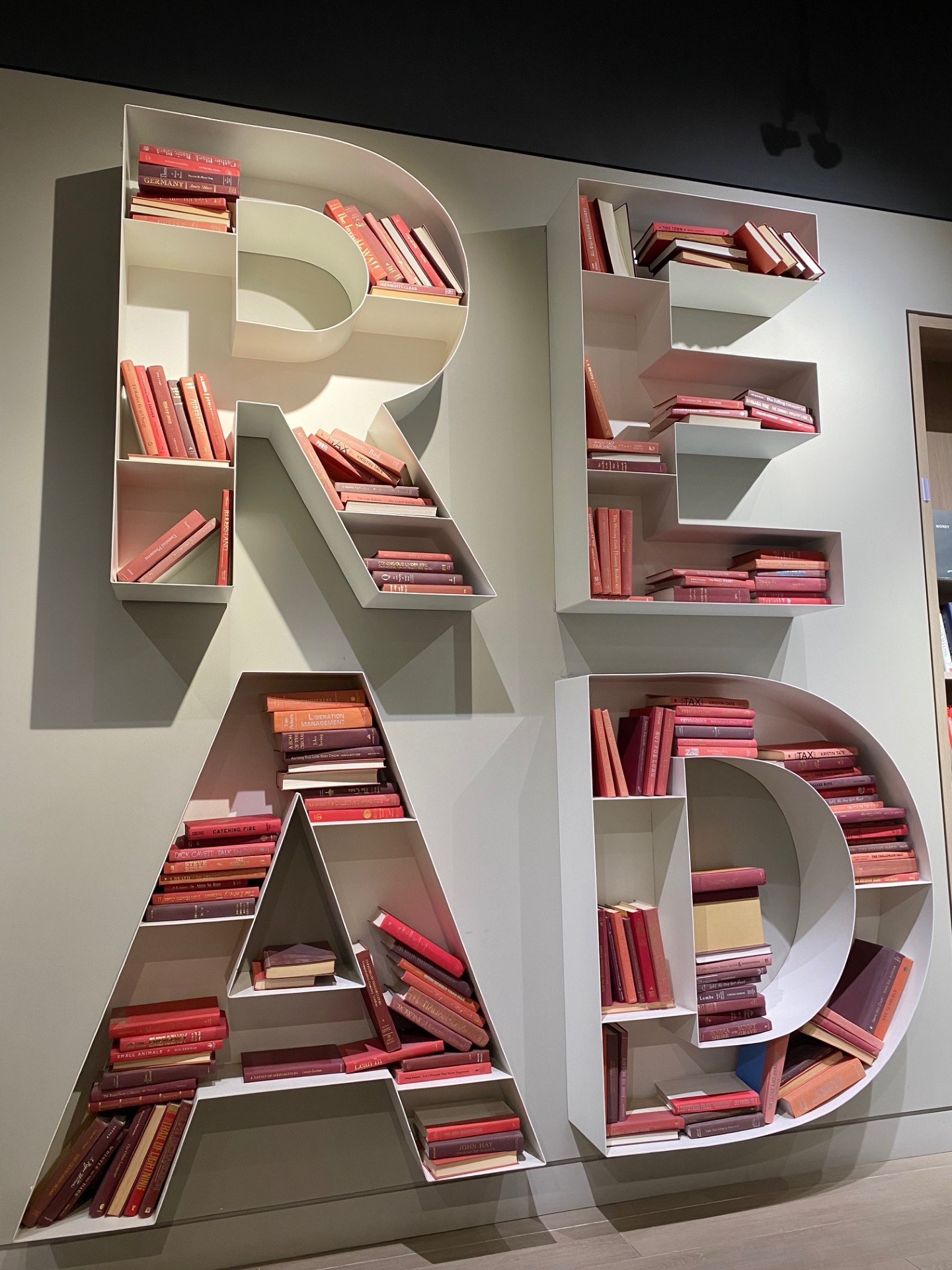
Today, we are chatting about something a bit different on the blog. In the past few months, I have FINALLY started to once again read for pleasure. It has shifted a lot within me and my approach to reading, and has brought up many questions about reading-for-pleasure versus reading-for-self-improvement. I’m interested in exploring if the act of reading in itself can be considered a form of resistance and radicalness. Join me for the conversation and questions of whether or not reading is a radical act.
When I was young…
When I was little, I used to read for pleasure ALL the time. My sisters and I all did, in fact. It was one of our favourite hobbies. We would all go to the library and stock up on books, and spend our free time reading. I truly loved it, and I believe it played a big role in me becoming a writer. When I started university, I had to read a lot more for school, and slowly my reading-for-pleasure hobby disappeared. Since graduating university, I’ve tried to get that fun sense of reading back, but it has been a challenge. I do believe I fell a bit into the trap of hustle culture, which seemed into my reading habits. Believing every moment needs to be “work” or dedicated to “bettering ourselves” became pervasive.


Hustle culture and reading
With this concept of hustle culture having a hold on me, much of my reading since graduating has been focused on aspects of self-improvement. Non-fiction books like self-help, self-improvement, and books that spark intellectual conversations naturally fit into this narrative. I truly loved reading a lot of these books. However, I found myself feeling a bit exhausted with the approach of constantly trying to improve myself and “be better.” Where was the sense of fun in reading that I felt so much as a little kid?
In this conceptualization of hustle culture, there isn’t a space for pleasure. There is no space for any activity that is not actively dedicated towards “bettering yourself.” Perhaps this is part of the reason that reading certain genres of fiction is often deemed “frivolous.” Yet, I wanted a space to read that was pleasurable and fun, like how I remember it used to be. So I turned back to reading fiction, which was mostly what I read when I was younger. It is shocking to me that it has taken me so long to get back into it: I’ve been out of school for six years now!!
The impact of turning back to fiction has been remarkable. I am finding these moments of fun again and getting lost in different stories that have nothing to do with improving myself. Of course, that doesn’t mean that there aren’t important takeaways from both fiction and non-fiction alike. Non-fiction definitely has its place, and each book of fiction is providing a new way of looking at the world. However, with less of a focus on self-improvement books, I no longer feel the overwhelming need to “work on myself” – as if I am an object that can be tweaked to perfection with just the right fix. In reading fiction, I find the possibility of escape, relaxation, and rest. In a world where the focus on hustle and busyness is glorified, choosing to relax by reading is a radical choice.


Impacts of reading fiction and non-fiction
Let’s expand on reading as a radical choice. Reading fiction often allows for a sense of escapism, and can provide a social commentary on the world, depending on the genre. Regardless of genre, though, the mere act of reading fiction is radical – especially reading genres that may be deemed as “frivolous.” Choosing to relax with a “frivolous” book in a world that is constantly pressuring you to improve yourself is a VERY radical act, in my opinion. Fully allowing yourself to rest and enjoy in a world where every minute should be squeezed out of you for productivity can be seen as resistance to hustle culture. Every time I choose to read fiction, I am aware of the choice I am making: fun, pleasure, enjoyment, and relaxation. In today’s societal emphasis on being busy and productive, this choice strikes me as a strong form of resistance.
I believe even reading non-fiction can be considered a radical act as well. Reading non-fiction provides the exchange of ideas and intellectual capabilities that are nowadays too often disappearing. In a world where misinformation is in every direction, and AI and technology are ever-present, choosing to sit with information and think critically about it is so important. I believe non-fiction offers a great way to do so, and to continue building this skillset. Books are an avenue for education, and it is no coincidence that any crusade against education also includes a crusade against books, especially in the non-fiction space. The opportunity for education, researched information, and critical thinking through reading non-fiction makes this act a form of resistance as well.


A radical act?
Whichever way you choose to look at it, reading is a radical act. Non-fiction allows for the exchange of ideas, sharing of researched information, and critical thinking skills. All of which push back against misinformation, AI and tech-fueled advances, and anti-intellectualism. Fiction allows for escapism, sometimes social commentary, and often new ways of thinking. All of which provide space for pleasure, relaxation, and rest, while simultaneously pushing back against the constant need for productivity and self-improvement. And as for poetry, my own favourite genre – I think it’s somewhere in the middle. Pleasure, new ideas, critical thinking, and knowing you aren’t alone in your own experiences is the heart of poetry for me.
So for the readers, I say all the power to you. Whichever genre you choose to enjoy, reading is resistance and reading is radical. I am very glad to have re-discovered my love of reading fiction, but regardless of which genre I choose to read, it brings me great joy to engage in this form of resistance. Continuing to find pleasure in reading for many years to come awaits. I hope you join me and keep reading!! ❤


One response to “Is Reading a Radical Act?”
[…] what is occurring all around us? In a similar vein to one of my previous blogs, discussing if reading is a radical act, this blog will explore the topic of art as […]